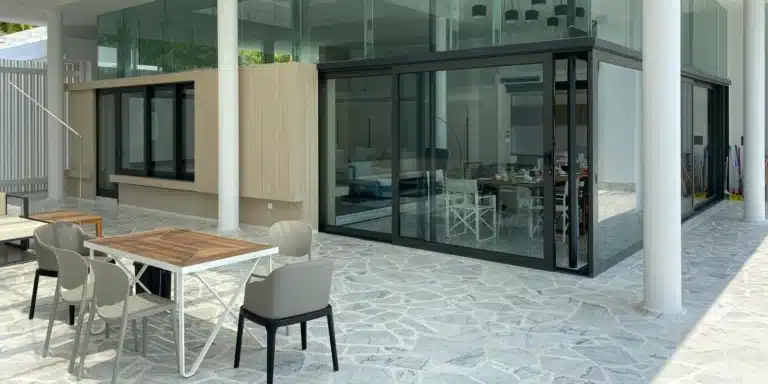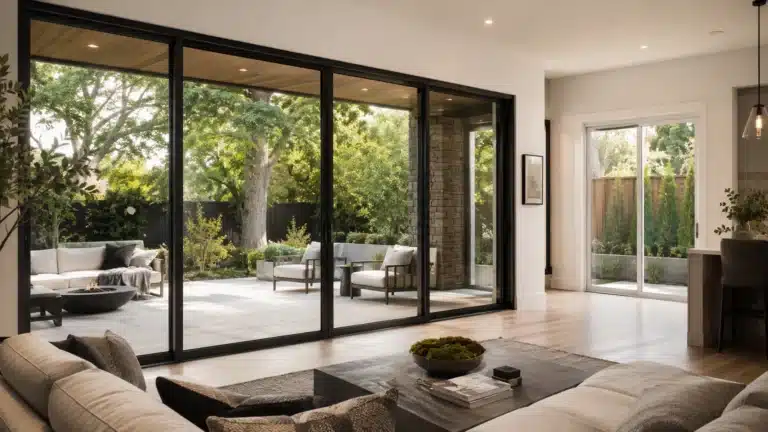

Executive Summary: The choice between casement and sliding windows shapes your home’s thermal performance and ventilation strategy. While casement windows offer superior airtightness and 100% airflow, sliding windows excel in space-saving design and large-format glazing. This guide compares the mechanics, efficiency, and ideal applications of both—showing how LIKI’s precision engineering elevates these standard forms into architectural systems.
The Mechanics: How They Work
The Casement Window
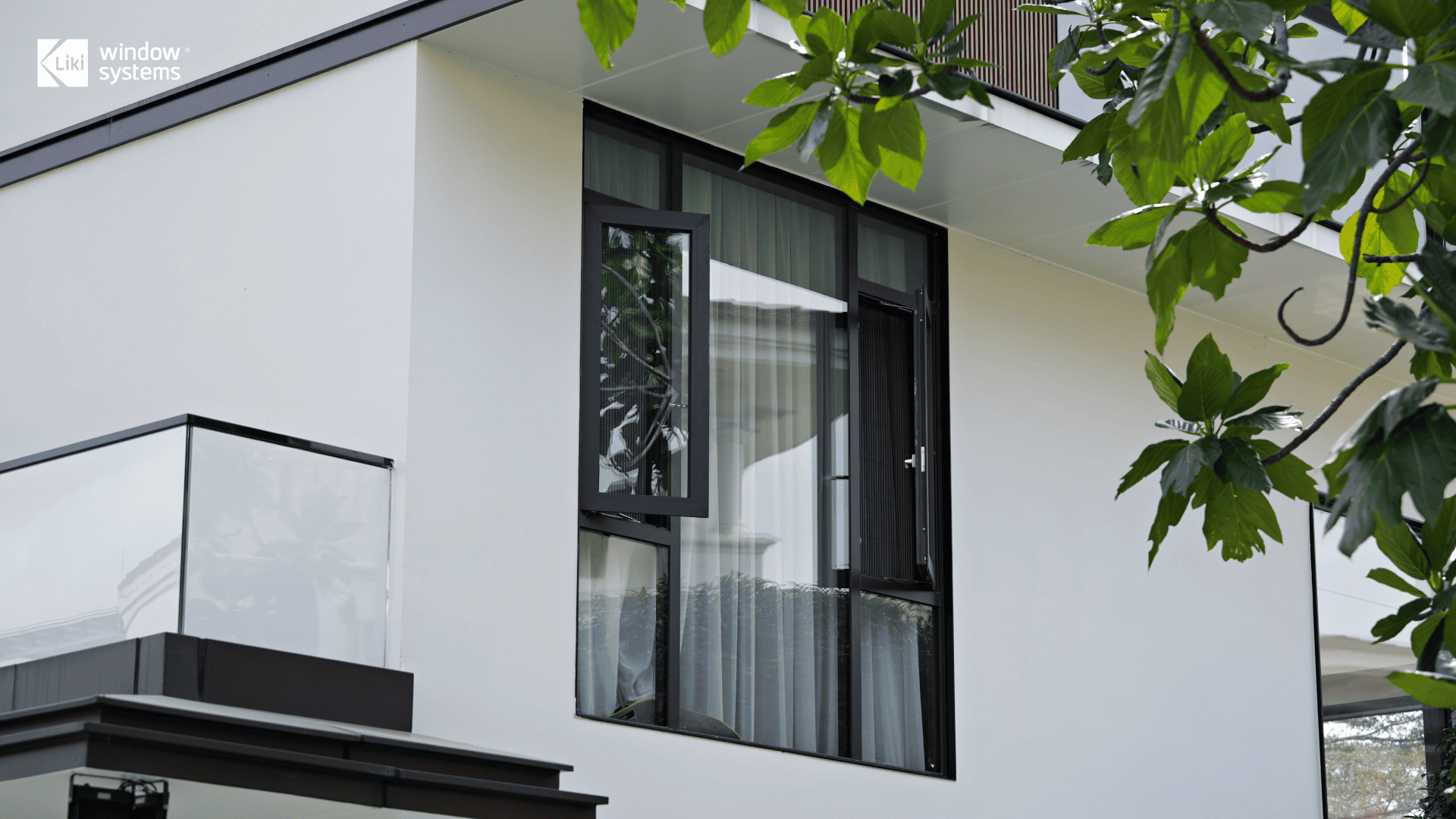
Mechanism: Hinged at the side, opening outward like a door (0° to 90°).
The LIKI Difference: We use GU/Securistyle friction hinges that allow the sash to hold its position firmly, even in high winds. When closed, multiple locking points compress the sash against the frame, creating a vacuum-like seal.
The Sliding Window
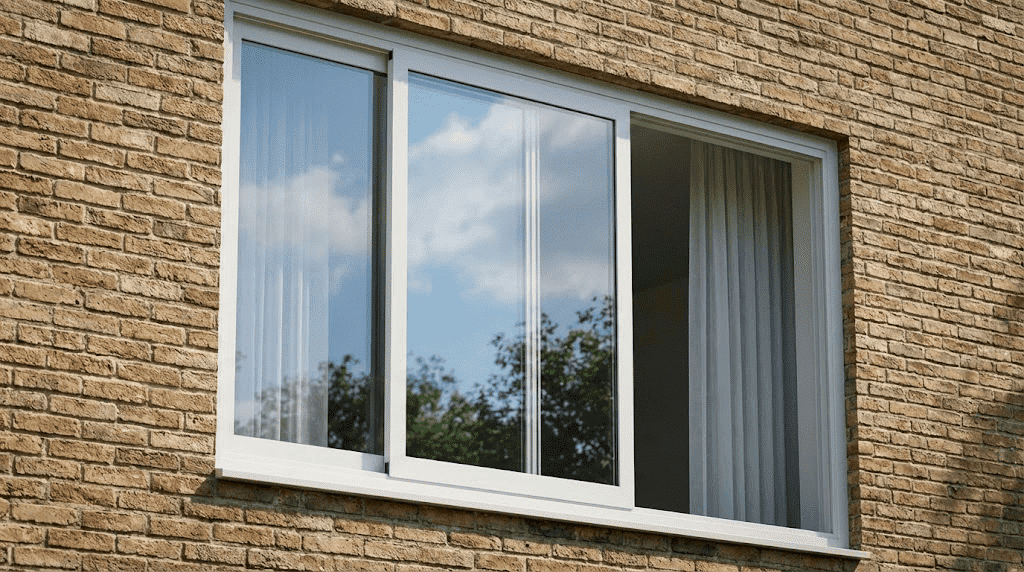
Mechanism: Sashes glide horizontally along a track.
The LIKI Difference: Standard sliders rattle. LIKI sliders use precision rollers and high-grade EPDM gaskets to ensure smooth operation and minimize the air leakage typically associated with this style.
Airflow & Ventilation: Which Breathes Better?
If your priority is capturing a breeze, the winner is clear.
- Casement (The Wind Catcher): Because the entire sash opens outward, it acts as a funnel, directing side breezes into the home.
- Sliding (The Space Saver): A slider is always blocked by at least one fixed sash, limiting ventilation to 50% maximum. However, it offers controlled airflow without obstructing walkways or patios.
💡 LIKI Design Tip: For bedrooms requiring maximum fresh air (and egress code compliance), casements are the superior choice. For patios where an open sash might be a hazard, sliders are safer.
Energy Efficiency: The Science of Sealing
This is where engineering matters most. The fundamental difference lies in Compression vs. Friction.
| Feature | Casement Window | Sliding Window |
|---|---|---|
| Sealing Type | Compression Seal (Like a refrigerator door) | Brush/Wiper Seal (Needs clearance to slide) |
| Airtightness | Superior (Tightens under wind load) | Moderate (Can be improved with Lift-Slide) |
| Best Climate | Cold, Windy, or Rainy | Mild, Temperate, or Protected Areas |
The LIKI Advantage: While standard sliders leak air, LIKI utilizes Lift & Slide technology for larger openings. This mechanism drops the sash down onto rubber seals when locked, mimicking the airtight performance of a casement.
Aesthetics: Minimalist vs. Traditional
Performance aside, the window must look good.
- 🖼️The “Picture Frame” Look: Casements often have slightly thicker frames to accommodate the hinge mechanism and multi-point locks. They suit traditional or transitional homes perfectly.
- 🔭The “Invisible” Look: Sliders (especially LIKI’s Slim Series) can support much larger glass panes with narrower frames. If your goal is a panoramic view with minimal obstruction, the slider wins.
Which System is Right for You?
There is no “better” window, only the right window for the zone.
Choose LIKI Casements If:
- You live in a high-wind or cold climate (requiring max airtightness).
- You want to maximize natural ventilation (100% opening).
- You need strictly high acoustic insulation.
Choose LIKI Sliders If:
- You have limited exterior space (e.g., walkways, balconies).
- You want oversized glass (up to 3.2m wide).
- You prefer a sleek, minimalist architectural aesthetic.
Why Not Have Both?
Most architectural projects use a hybrid approach: Casements for bedrooms and Sliders for living areas. LIKI’s unified system design ensures they look identical from the outside.