For coastal builds and high-wind zones, the choice between awning vs casement windows comes down to aerodynamics and water deflection. Casement windows open outward like a door, capturing crosswinds like a sail, which can lead to hinge damage and water intrusion if left open during a storm. Awning windows, hinged at the top, act as a structural canopy. This geometry continuously deflects rain and wind, allowing for safe ventilation even during sudden downpours without risking interior drywall damage.
For custom builders, window selection is not just an aesthetic decision; it is a liability management strategy. When you build on an exposed coastline or in a valley with unpredictable microclimates, relying on the homeowner to manually crank windows shut before every squall is a recipe for expensive callbacks. To eliminate moisture-related damage and protect your framing and drywall, you must understand the aerodynamic physics of how different window sash configurations interact with building facades under wind loads.
Scene: A newly handed-over coastal custom build experiences its first severe autumn squall over the weekend.
What you notice: You get a frantic call. A sudden gust caught an open casement window, violently slamming it against its limits. Worse, horizontal rain bypassed the vertical sash, soaking the custom drywall and imported hardwood. Meanwhile, the awning windows in the adjacent room remained open, calmly shedding water and ventilating the space without a drop inside.
What’s really happening: A fundamental mismatch between the window’s geometric profile and the facade’s weather exposure has turned a natural weather event into a costly callback.
What to do next: Stop relying on the homeowner’s reaction time. Implement a strict facade decision matrix during the framing stage to dictate where side-hung vs. top-hung windows are structurally appropriate.
The Canopy vs. The Open Sail: How Awning vs Casement Windows Handle Sudden Coastal Gusts
When engineering a building envelope for a high-wind zone, an open window sash becomes an active structural surface. The direction in which that sash opens determines whether the wind load is absorbed safely or concentrated destructively.
What matters: Casement windows are side-hung and open outward. In a crosswind, the sash acts exactly like an “open sail.” It catches the wind, creating severe positive pressure on the glass and extreme leverage against the hinges. Awning windows, conversely, utilize a “canopy effect.” Because they are hinged at the top and push outward from the bottom, their sloping glass surface naturally guides air currents up and over the opening. They deflect the wind rather than trying to trap it.
How to verify: Review the localized wind rose data for your site. If a specific elevation faces prevailing storm tracks with minimal natural windbreaks, prioritize the aerodynamic geometry of top-hung awning configurations over side-hung casements to reduce structural stress on the window hardware.
| Performance Metric | Casement Window (Side-Hung) | Awning Window (Top-Hung) |
|---|---|---|
| Maximum Ventilation | 100% opening area. Excellent for flushing out stale air on calm days. | Approx. 50% restricted opening. Slower air exchange but controlled. |
| Sudden Gust Vulnerability | High. Acts as a sail, stressing side hinges and risking sash warping. | Low. Aerodynamic slope deflects gusts; weight is evenly distributed. |
| Rain Protection (Open) | None. Vertical opening exposes the interior immediately to angled rain. | Excellent. Acts as a protective shield against vertical and lightly angled rain. |

Gravity-Assisted Deflection: The Physics of Shedding Water in Custom Awning Windows
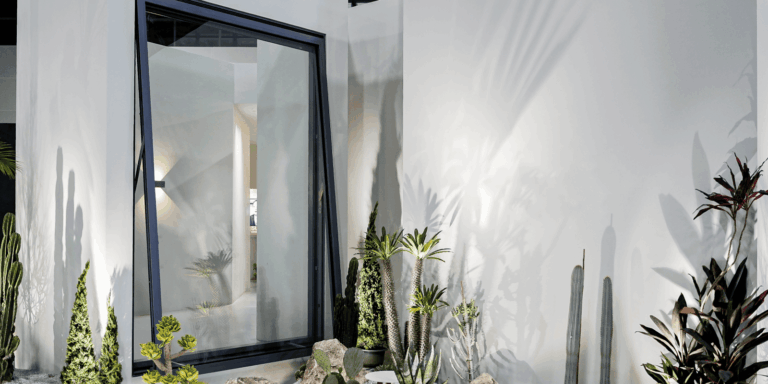
In building science, the most reliable moisture management strategy is not to trap water, but to guide it away from the building envelope. Top-hung custom awning windows leverage gravity to create a natural, shedding surface. Because the sash tilts outward from the bottom, it forces rainwater to run down the glass and fall safely away from the rough opening.
What matters: When an awning window is partially open during a storm, its overlapping geometric profile ensures that vertical and moderately angled rain cannot reach the interior sealing plane. This gravity-assisted deflection allows the building to “breathe” and maintain air exchange without exposing the interior drywall to moisture damage.
How to verify: Do not rely on generic marketing claims; always require static water penetration test reports before approving the window schedule. For high-risk coastal exposures, systems must be tested to strict engineering standards. For instance, LIKI custom awning platforms are engineered to meet the ASTM E331 standard, maintaining continuous water resistance at a test pressure of 550 Pa (approx. 11.5 psf) without any leakage.
Sealing Planes and Rain Trajectories: Why Casements Require Immediate Action
A high-performance window that only protects the home when fully locked is only solving half the problem. For custom builders, the real liability arises during the unpredictable moments when a homeowner leaves the windows open. Casement windows operate on a vertical axis, which completely exposes the interior weatherstripping and the floor below to the outside elements.
What matters: If wind-driven rain approaches at any angle other than perfectly parallel to the open casement sash, the glass acts as a funnel, directing water straight into the living space. This design requires immediate manual intervention to close the windows, shifting the weather-protection responsibility from the engineered building envelope to the occupant’s reaction time.
How to verify: Cross-reference your building’s architectural elevations with the local wind rose diagram. If a facade is heavily exposed to the predominant storm track, installing side-hung casements on that elevation guarantees future moisture-related callbacks.
Common mistake: Builders often assume that specifying a window with a high design pressure (DP) rating means it is inherently “rainproof.” While upgrading to triple-glazed awning windows provides exceptional thermal and structural performance when locked, you must evaluate how the window’s opening geometry protects the interior while it is actively ventilating.

The Twisted Hinge: Load Distribution Differences in Large Awning vs Casement Windows
When engineering large architectural openings, the weight of triple-glazed sash units combined with dynamic wind loads can cause significant hardware fatigue. The hinge geometry you select will determine whether the window operates smoothly a decade from now or requires a costly sash replacement.
What matters: A side-hung casement window places its entire weight and wind load on the side hinges. In a sudden gust, this creates extreme torsional leverage (twisting force) that can rip the hardware tracks or cause the sash to sag, eventually preventing it from locking. Top-hung awning windows distribute their weight evenly across heavy-duty friction stays at the top of the frame, converting wind pressure into a secure sealing force rather than destructive torsion.
How to verify: Review the hardware load paths and drainage engineering. For oversized spans (up to 78 inches), specify systems engineered like the LIKI custom awning platforms. These integrate heavy-duty friction stays directly into reinforced structural cavities alongside a concealed drainage system, ensuring that both weight and water are managed internally without stressing the operating mechanism.
💡 Expert Insight from Bella (LIKI Systems)
“On coastal elevations, hardware failure is rarely a manufacturing defect—it’s a physics mismatch. When a side-hung casement is caught by a gust, the hinge tracks experience massive torsional stress. We provide the wind-load data and hardware cycle-test reports to help you select the right axis of rotation. We provide the structural parameters, but the final facade strategy is yours. Match the window’s geometry to the site’s exposure, and you eliminate the hardware fatigue that leads to expensive post-handover callbacks.”
The Facade Decision Matrix: Selection Boundaries Based on Overhangs
There is no universally perfect window, only perfect architectural integration. The depth of your roof overhangs and the specific exposure of the facade should dictate your window schedule. Specifying custom aluminum awning windows on an unprotected wall is a calculated structural decision to mitigate water intrusion risks.
What matters: If you install casement windows on a flush, modern facade with zero roof overhang facing the predominant wind direction, you are virtually guaranteeing moisture-related callbacks. Understanding these boundaries during the framing stage protects your profit margins and reputation.
| Facade Exposure (Roof Overhang) | Wind & Rain Zone | Recommended Window Type | Builder Rationale |
|---|---|---|---|
| Deep Overhang (> 3ft) | Sheltered | Casement or Awning | Overhang protects the opening; casements can be safely used for maximum air exchange. |
| Moderate Overhang (1ft – 3ft) | Mixed / Coastal | Awning Preferred | Provides a necessary physical canopy to deflect angled rain when ventilating. |
| Flush Facade (Zero Overhang) | High Exposure / Storm Tracks | Awning Mandatory | The window itself must act as the primary water-shedding surface during operation. |
5-Step Site Inspection Checklist for High-Wind Zones
- Verify Structural Fastening: Ensure structural screws penetrate through the window’s thermal break and anchor firmly into the rough opening framing.
- Inspect Drainage Weep Holes: Before exterior cladding goes up, confirm that the concealed drainage paths are free of debris and construction dust.
- Check Hinge Torque: Test the friction stays on top-hung windows to ensure they hold the heavy sash firmly against unexpected gusts.
- Confirm Continuous Positive Pressure: Close the window on a piece of paper; if you can easily pull it out, the perimeter compression needs adjustment.
- Review the Weatherstripping: Ensure the EPDM gaskets are fully seated in their tracks, particularly at the corners where leaks typically originate.
Frequently Asked Questions
Which is better for rainy climates: awning or casement windows?
Awning windows are generally superior in rainy climates because their top-hinged design acts as a canopy, shedding water away from the opening and allowing for ventilation even during light rain.
Do casement windows catch more wind than awning windows?
Yes. Because casement windows open outward from the side, they act like a sail, catching crosswinds which can put severe torsional stress on the hinges and the sash frame.
Can you leave awning windows open in a heavy storm?
While awning windows provide excellent water deflection for light to moderate rain, they should be fully closed and locked during severe storms or hurricane-level wind events to maintain the building’s structural water resistance.
Why do large casement windows sometimes sag?
Large casement windows can sag if the side hinges cannot handle the heavy weight of double or triple-glazed glass, especially when subjected to repeated wind loads. Proper heavy-duty hardware and structural frames are essential.