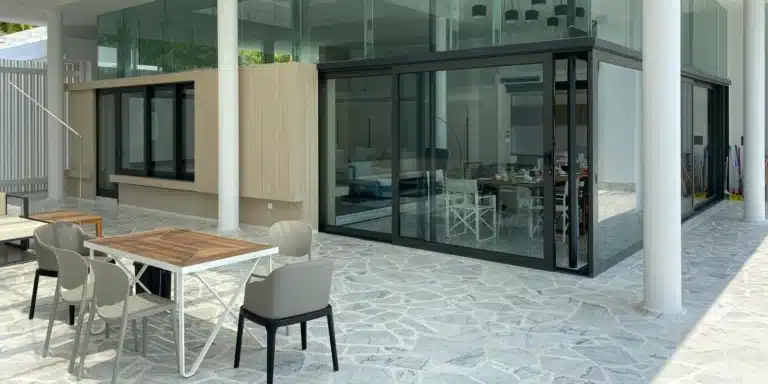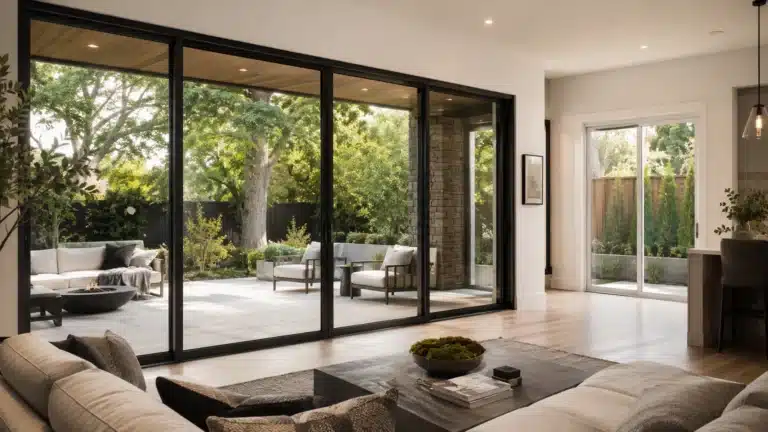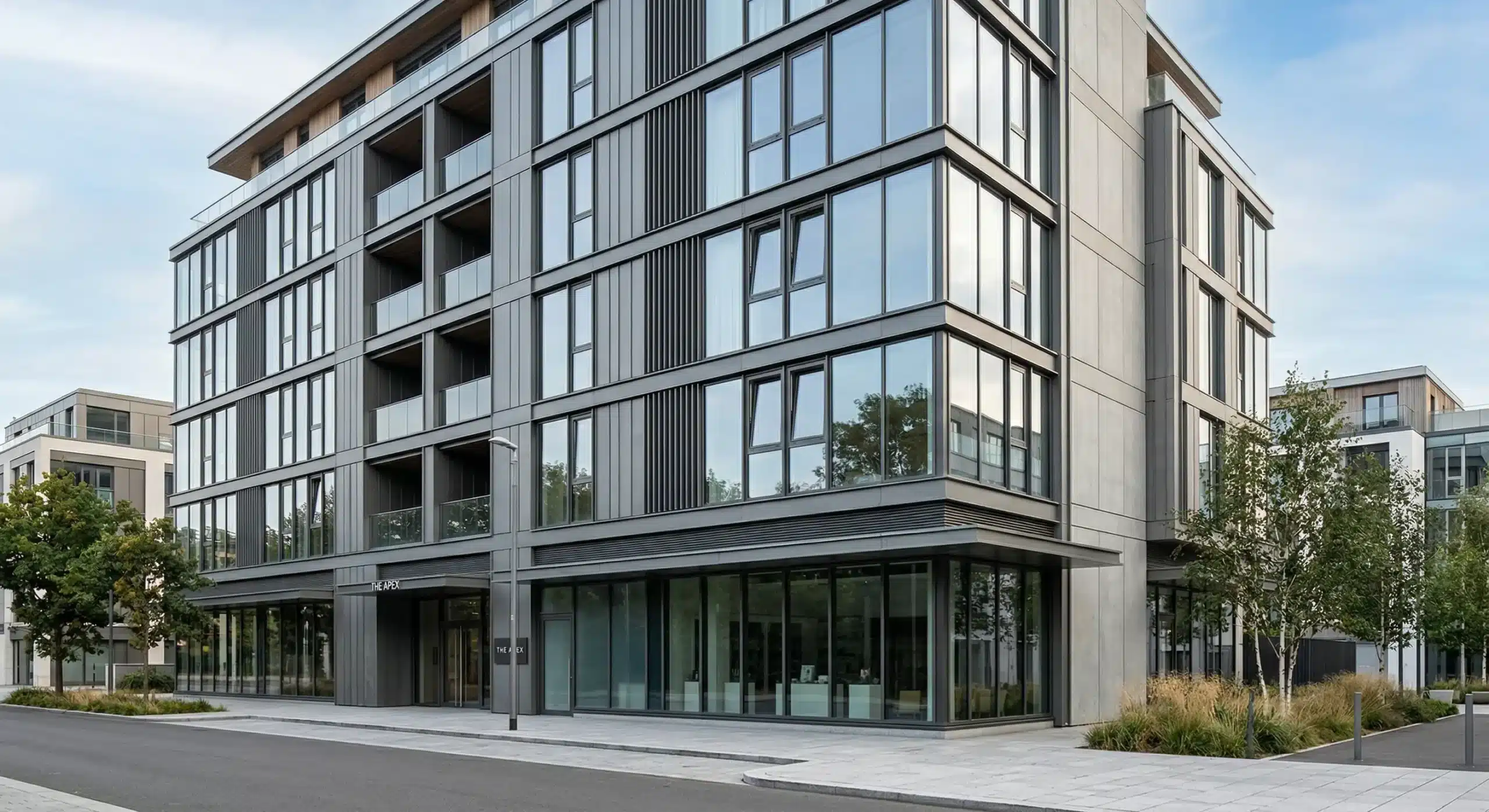
Choosing the right aluminum window system is not just about frame style or appearance. For commercial, residential, and high-rise projects, the right specification depends on energy performance, structural requirements, code compliance, durability, and long-term design goals.
Today’s aluminum window systems are expected to do far more than provide strength. They must support demanding thermal targets, comply with permitting requirements such as California Title 24, align with NFRC and AAMA performance standards, and fit modern architectural preferences for larger glass, slimmer profiles, and premium finishes.
Advanced systems from brands like LIKI Systems combine proprietary profile engineering, 6063-T66 primary aluminum, premium hardware such as Roto®, GU®, and Sobinco®, and high-performance thermal break technology to meet these expectations across North America and beyond.
This guide explains how to evaluate aluminum window systems for real-world projects, including which technical metrics matter most, how to compare configuration types, what mistakes to avoid, and how to select a solution that balances aesthetics, compliance, and long-term value.
Important: This content is provided for general informational purposes only and does not constitute professional, engineering, or legal advice. Final compliance and project requirements should always be verified with local authorities, code consultants, and certified building professionals.
As sustainability becomes a bigger factor in building envelope decisions, aluminum continues to stand out for its recyclability, long service life, and compatibility with environmentally responsible finishes. Learn more at LIKI’s Commitment to Sustainable Aluminum Window Systems.
Quick Selection Guide
If you need a fast way to evaluate an aluminum window system, start with these core decision points:
- For high-rise projects: Prioritize structural load testing, wind resistance, balanced drainage design, and documented ASTM/AAMA compliance.
- For coastal environments: Choose corrosion-resistant finishes such as high-performance anodizing or marine-grade powder coating.
- For energy-code-driven projects: Specify thermally broken frames, NFRC-certified performance data, and U-factors appropriate to the local code path.
- For premium residential projects: Focus on slim sightlines, multi-point locking, acoustic performance, and support for double or triple glazing.
- For custom architecture: Confirm the supplier can deliver project-specific dimensions, shapes, finishes, hardware packages, and technical documentation.
Why Aluminum Window Systems Continue to Lead Modern Design
Aluminum window systems have become a preferred solution in both residential and commercial construction because they combine structural reliability with clean aesthetics and advanced engineering flexibility. Unlike older assumptions about aluminum as a purely conductive material, today’s thermally broken systems can deliver excellent energy performance while maintaining narrow frames and large expanses of glass.
Key Benefits of Aluminum Window Systems
- High Structural Strength: 6063-T66 primary aluminum supports wider spans, larger openings, and demanding wind-load conditions.
- Long-Term Durability: Aluminum resists warping, moisture damage, rot, and many forms of environmental degradation.
- Thermal Efficiency: Modern thermal break systems help reduce heat transfer and improve insulation performance.
- Design Flexibility: Slim profiles and custom fabrication support both contemporary and project-specific architectural concepts.
- Corrosion Resistance: Premium anodized and powder-coated finishes perform well in harsh and coastal environments.
- Sustainability: Aluminum is fully recyclable and compatible with low-VOC finishing systems and long-lifecycle construction goals.
- Precision Manufacturing: CNC fabrication and automated production improve dimensional accuracy and installation consistency.
When Aluminum Is the Best Choice
Aluminum window systems are particularly well suited for:
- High-rise construction where strength, wind resistance, and controlled water management are critical.
- Coastal and marine buildings that require superior finish durability and corrosion protection.
- Commercial and institutional projects needing reliable operation, high cycle life, security hardware, and code compliance.
- Luxury residential projects that demand minimal sightlines, oversized openings, and premium finish options.
- Custom architectural applications where off-the-shelf sizes are not sufficient.
Aluminum vs. Vinyl vs. Wood Windows
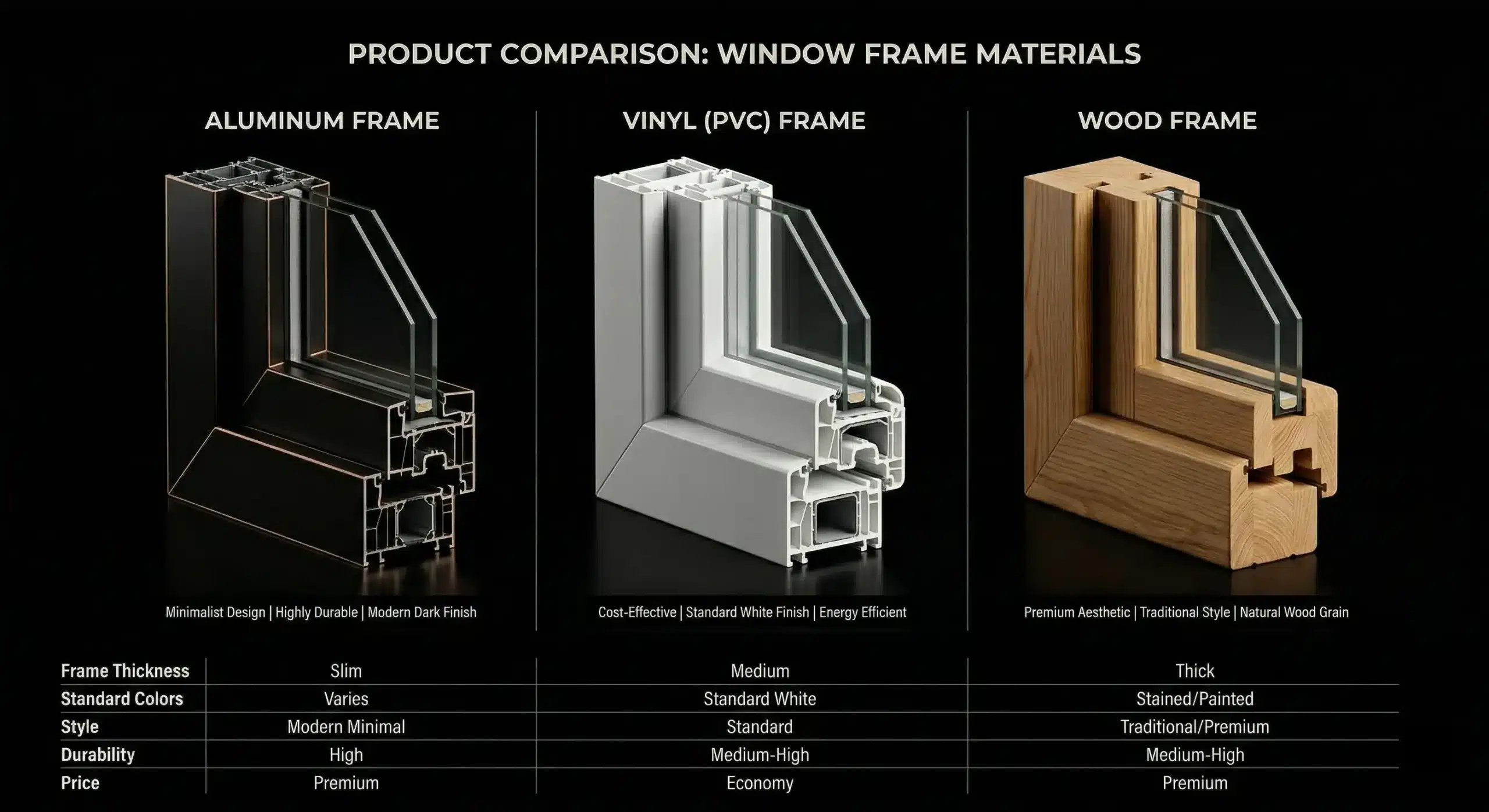
Material selection affects not only appearance, but also structural capacity, maintenance, thermal behavior, and lifespan. Aluminum is often chosen when project demands go beyond basic residential performance.
| Feature | Aluminum | Vinyl | Wood |
|---|---|---|---|
| Structural Strength | Excellent | Moderate | Good |
| Slim Sightlines | Excellent | Limited | Moderate |
| Durability | Excellent | Good | Moderate |
| Maintenance | Low | Low | Higher |
| Thermal Performance | Excellent with thermal break | Good | Good |
| Best for Large Openings | Yes | Limited | Limited |
| Service Life | Long | Moderate | Moderate |
| Customization Potential | High | Moderate | High |
For projects requiring high structural performance, large-format glazing, premium finishes, or strong code documentation, aluminum is often the most capable long-term choice.
Understanding the Most Important Performance Specifications
Choosing the right aluminum window system requires more than reviewing frame thickness or hardware brand names. The most important question is whether the system has been engineered and tested to meet the actual demands of your project.
1. Energy Performance: U-Factor and SHGC
Energy efficiency is one of the first specification filters for modern projects. For aluminum systems, thermal performance depends on the full assembly: frame, thermal break, glass package, spacer system, and seals.
- U-factor measures how much heat passes through the window assembly. Lower values indicate better insulation. In simple terms, a lower U-factor means better thermal performance.
- SHGC (Solar Heat Gain Coefficient) measures how much solar radiation passes through the glazing. The ideal value depends on whether the project is heating-dominated or cooling-dominated.
Well-designed thermally broken aluminum systems can achieve high-performance results, including U-factors around 0.26–0.30 when paired with triple glazing.
| Climate Type | Typical U-Factor Target | Typical SHGC Target | Recommended Features |
|---|---|---|---|
| Cold / Mixed Climate | ≤ 0.30 | 0.40–0.60 | Triple glazing, warm-edge spacers, strong thermal breaks |
| Cooling-Dominated Climate | ≤ 0.30 | 0.25–0.40 | Low-E coatings, solar-control glass, thermally broken frames |
| Coastal / High Exposure | Project-specific | Project-specific | Corrosion-resistant finish, tested seals, durable glazing package |
Certification matters. NFRC data should reflect the exact system and glazing combination being specified, not a generic catalog placeholder.
2. Structural and Durability Standards
For commercial, multi-story, and exposed-site projects, structural and weather performance are just as important as thermal metrics.
- ASTM E330: Evaluates structural performance under wind load.
- AAMA 101 / 201: Covers performance requirements for windows and doors, including material and fabrication expectations.
- ASTM E283, E547, E1105: Address air infiltration and water penetration resistance.
- Hardware endurance testing: Confirms operational durability for repeated use and higher sash loads.
LIKI Systems supports these requirements with reinforced profiles, premium tested hardware, and fabrication details such as Pin-Injection Corner Technology to strengthen high-stress joints in larger units.
3. Thermal Break Technology
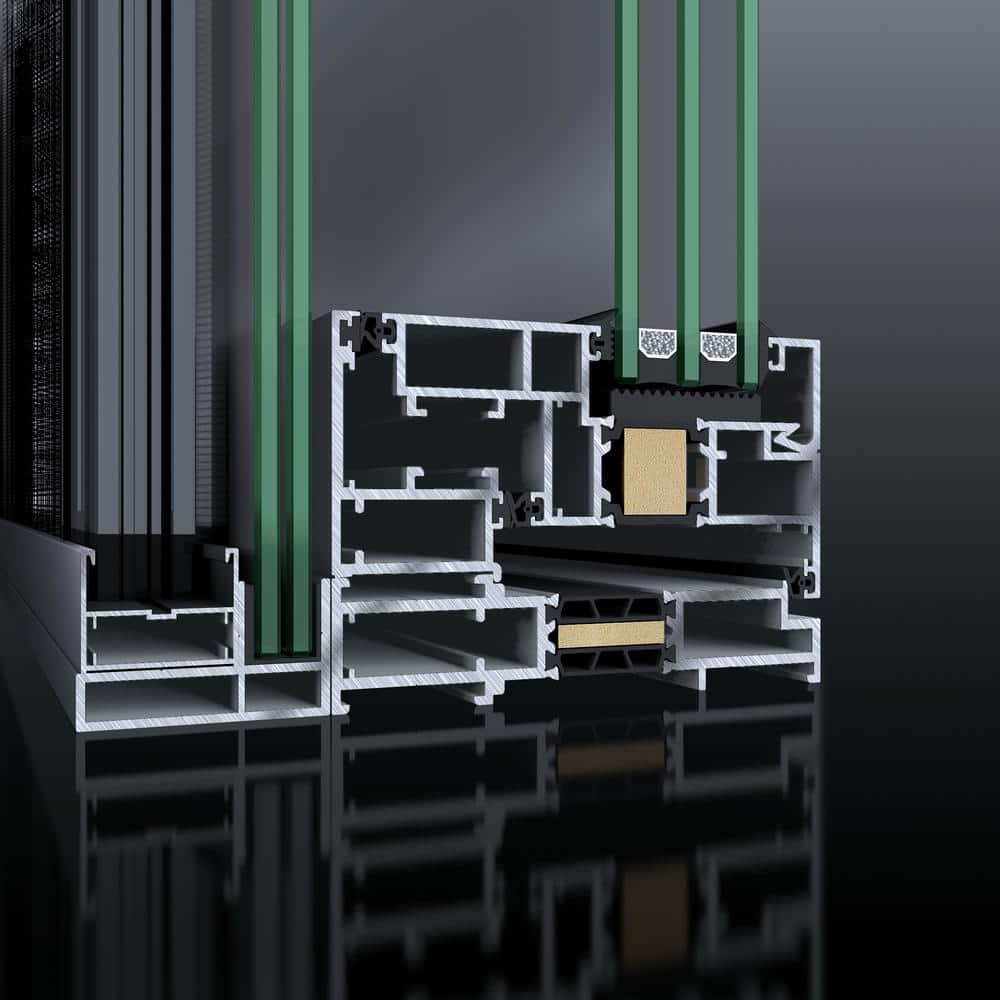
Thermally broken aluminum frames are essential for modern energy code compliance. A thermal break, typically made from polyamide, separates the interior and exterior aluminum sections to reduce conductive heat transfer.
This improves insulation, helps control interior condensation, and allows aluminum systems to compete with or exceed the performance of many alternative frame materials when paired with the right glass package.
4. Finishes and Corrosion Protection
Finish selection should be based on environment, not just color preference. Coastal, high-UV, and humid regions demand more robust surface protection.
- Anodized finishes offer excellent durability and corrosion resistance.
- Architectural powder coating supports a wide color range and strong weather protection.
- High-performance coating systems can significantly reduce maintenance demands over time.
LIKI Systems offers 200+ finish options, including deep anodizing and AkzoNobel® powder coatings designed for long-term exterior exposure.
2026 Design and Specification Trends in Aluminum Windows
Architectural expectations and code requirements continue to shape how aluminum window systems are developed and specified. Several trends are now influencing both design intent and technical evaluation.
- Slimmer frame profiles: Architects want narrow sightlines without compromising structural stability.
- Triple-glazing compatibility: More projects now require heavier insulated glass units for higher thermal performance.
- Greater corrosion resistance: High-performance finishes are increasingly important for lifecycle durability.
- Advanced sealing systems: Multi-layer gaskets and improved drainage support better air, water, and acoustic performance.
- Sustainability transparency: Buyers increasingly expect information about recycled content, VOC-free finishes, and responsible sourcing.
- Digital manufacturing: Automated production improves consistency, reduces fabrication error, and supports custom orders at scale.
Types of Aluminum Window Systems
The best window configuration depends on ventilation goals, user operation preferences, façade design, and project-specific performance requirements.
Casement Windows
Casement windows are side-hinged and typically open outward. They are a strong choice for projects requiring excellent airtightness, strong ventilation performance, and secure multi-point locking.
LIKI Aluminum Casement Windows combine thermally broken profiles, EPDM gaskets, and premium hardware for energy efficiency and weather resistance.
Awning Windows
Awning windows are top-hinged and open outward from the bottom. They are useful for controlled ventilation, especially where rain protection or privacy is a concern.
Parallel Opening Windows
Parallel opening systems move the sash outward in a balanced, parallel motion. They are often selected for high-rise and large-format applications because they reduce swing hazards and support uniform ventilation around the perimeter.
Tilt & Turn Windows
Tilt & turn windows offer two operating modes: tilt for secure ventilation and turn for full inward opening. They are especially popular in premium residential and urban projects where ventilation, easy cleaning, sealing performance, and security all matter.
LIKI Tilt & Turn Window Systems feature precision hardware, multi-point locking, and advanced gasket systems for high energy and acoustic performance.
Sliding and Lift & Slide Systems
Sliding systems are ideal where space-saving operation and wider glass areas are priorities. Lift & slide configurations are especially suitable for larger panels and premium residential openings such as patios and balconies.
| System Type | Main Advantage | Typical Use | Performance Focus |
|---|---|---|---|
| Casement | Excellent airtightness | Residential, mid-rise, high-performance envelopes | Energy efficiency, ventilation, security |
| Awning | Weather-protected ventilation | Bathrooms, upper walls, rainy climates | Ventilation and weather control |
| Parallel Opening | Balanced, safe ventilation | High-rise and large-format openings | Airflow, façade safety, controlled opening |
| Tilt & Turn | Dual-function operation | Urban residential, premium homes, multi-story buildings | Flexibility, sealing, cleaning access |
| Sliding / Lift & Slide | Space-saving large openings | Patios, balconies, large residential openings | Glass area, usability, modern aesthetics |
Custom vs. Standard Aluminum Window Systems
Standard catalog systems may be suitable for straightforward projects, but many commercial, luxury residential, and architect-driven applications benefit from custom-engineered solutions.
- Custom dimensions and shapes: Needed for oversized units, irregular geometries, and unique façade compositions.
- Project-specific hardware packages: Important for security, high-cycle use, or specialty operation requirements.
- Finish flexibility: Essential for matching architectural palettes or exposure-specific finish performance.
- Tailored documentation: Required when project approvals depend on exact performance matching.
LIKI Systems fabricates windows and doors to project-specific dimensions using Industry 4.0-enabled production lines, supporting repeatable precision and broad customization.
Step-by-Step Guide to Choosing the Right Aluminum Window System
Step 1: Define the Project Conditions
- Climate: Is the project located in a coastal, high-humidity, high-wind, or high-UV region?
- Code path: Are there specific local energy or envelope requirements such as California Title 24?
- Building type: Is the system for residential, mixed-use, institutional, or high-rise construction?
- Exposure: Will the façade face severe weather or elevated structural demand?
Step 2: Clarify the Design Intent
- Determine the desired sightlines and visual language.
- Match the opening type to how the space will actually be used.
- Consider whether large-format glazing or minimalist framing is required.
Step 3: Review Thermal and Structural Data
- Request product-specific U-factor and SHGC documentation.
- Check structural test standards relevant to the project.
- Confirm air and water performance data for exposed conditions.
- Verify compatibility with the actual glass package being specified.
Step 4: Evaluate Hardware and Operation
- For heavy or frequently used sashes, specify tested premium hardware.
- Confirm locking systems align with security and usability requirements.
- Review cycle-life performance where long-term operation is critical.
Step 5: Confirm Finish and Environmental Suitability
- Match finish type to the project environment.
- For marine or harsh conditions, require proven corrosion-resistant finishing systems.
- Review maintenance expectations before final selection.
Step 6: Compare Supplier Capabilities
Not all manufacturers provide the same level of engineering support. Strong suppliers should offer:
- NFRC, AAMA, and ASTM-aligned technical documentation
- Project-specific engineering support
- Customization capacity for dimensions, shape, and hardware
- Reliable crating, shipping, and installation guidance
- Warranty terms linked to proper installation and maintenance
Explore LIKI Technical Documentation and Performance Reports for downloadable reports, drawings, and supporting specification materials. For project consultation, visit LIKI’s Engineering and Technical Support.
Selection Checklist
- [ ] Project climate and environmental conditions are defined
- [ ] Local code and energy targets are confirmed
- [ ] U-factor and SHGC data match the actual frame and glass package
- [ ] Structural, air, and water test data have been reviewed
- [ ] Hardware performance matches sash size and usage expectations
- [ ] Finish type is appropriate for site exposure
- [ ] Shop drawings and technical documents match the specified system
- [ ] Installation requirements align with warranty conditions
Why Architects, Builders, and Developers Choose LIKI Systems
For professionals comparing aluminum window manufacturers, technical support and documentation can be just as important as the product itself. LIKI Systems is designed to support both performance and project execution.
- 6063-T66 primary aluminum for higher structural reliability
- Technoform® thermal breaks for improved insulation performance
- Roto®, GU®, and Sobinco® hardware for tested long-term operation
- Precision CNC fabrication with tight dimensional tolerances
- Custom engineering capability for non-standard projects
- Broad finish selection including anodized and premium powder-coated options
- Project-specific technical documents to support approvals and specification workflows
Installation and Maintenance Best Practices
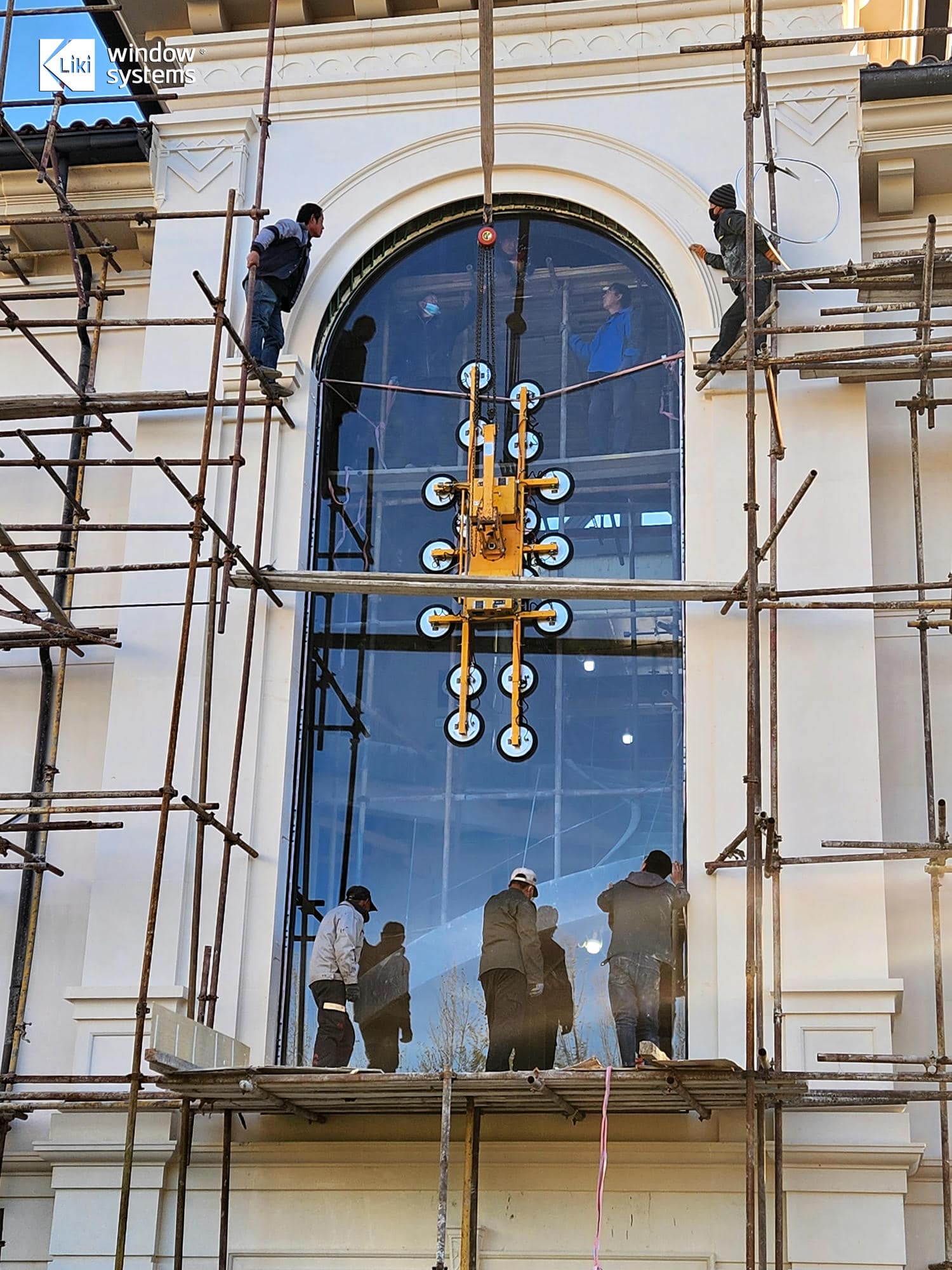
Even the best-performing aluminum window system will underperform if installation quality is poor. Correct handling, seal continuity, and hardware adjustment are essential to maintaining tested performance in the field.
Installation Best Practices
- Avoid twisting or dragging frames during transport and positioning.
- Protect thermally broken components from impact during handling.
- Inspect corners, gaskets, and frame integrity before installation begins.
- Install drainage and isobaric chamber components exactly as detailed in manufacturer documents.
- Use compatible perimeter sealants and anchoring strategies based on the substrate condition.
- Field-test for water resistance when required by project quality control procedures.
Maintenance Best Practices
- Inspect and clean frame surfaces regularly.
- Lubricate hinges, locks, and moving components annually or as required.
- Check gaskets and seals for compression, tearing, or discontinuity.
- Clean tracks and drainage pathways to prevent obstruction.
- Follow the manufacturer’s maintenance manual to preserve warranty coverage.
For detailed installation diagrams and maintenance schedules, visit LIKI Technical Documentation and Performance Reports.
Common Mistakes to Avoid When Choosing Aluminum Window Systems
- Choosing a system without an effective thermal break: This can lead to poor energy performance, condensation issues, and code complications.
- Using generic test data: Performance documentation should match the actual system and glazing package being supplied.
- Under-specifying hardware: Heavy sashes need appropriate hinges, rollers, locks, and cycle-tested operation.
- Ignoring environmental exposure: Coastal or high-humidity projects require finish systems suited to corrosive conditions.
- Focusing only on appearance: Slim frames are valuable, but they must still meet structural and operational requirements.
- Overlooking seal and corner quality: Poor sealing details can undermine air, water, acoustic, and long-term durability performance.
- Failing to plan for installation: Even high-end products can fail if field installation does not follow the tested assembly logic.
Frequently Asked Questions
What makes thermally broken aluminum frames essential?
A thermally broken frame uses a non-metal barrier, typically polyamide, between interior and exterior aluminum sections. This reduces heat transfer, improves insulation, and helps control condensation. For many modern projects, thermal breaks are essential for meeting energy-code targets.
What U-factor and SHGC targets should I look for?
Many cold or mixed-climate projects target U-factors of 0.30 or lower. SHGC targets often range from 0.25–0.40 in cooling-dominated climates and 0.40–0.60 in climates where passive solar gain is useful. Final values should always be aligned with local code and project design strategy.
Are aluminum windows good for coastal or high-rise projects?
Yes. Aluminum is especially well suited to coastal and high-rise applications when the system includes appropriate structural reinforcement, corrosion-resistant finishing, and tested wind and water performance.
How do I verify code compliance?
Request project-specific NFRC thermal data and applicable AAMA and ASTM performance documentation for the exact system being supplied. Do not rely only on general brochure values.
Which is better: casement or sliding aluminum windows?
Casement windows generally provide better airtightness, energy performance, and security. Sliding systems are ideal where space-saving operation and larger uninterrupted glass areas are more important.
How long do premium aluminum window systems last?
High-quality aluminum window systems can offer a service life of several decades when they use durable alloy, proper finishes, tested hardware, and are maintained correctly.
Can aluminum windows support triple glazing?
Yes. Many advanced aluminum systems are engineered to support triple glazing, which can significantly improve thermal and acoustic performance when paired with the correct frame and spacer design.
Are aluminum windows worth it for residential projects?
For homeowners seeking durability, slim design, premium finishes, stronger security hardware, and long-term performance, aluminum windows can be an excellent investment, especially in custom or high-end residential construction.
Request Project-Specific Support
If you are comparing aluminum window systems for a commercial, residential, or high-rise development, the most reliable next step is to review project-specific technical data rather than relying only on catalog claims.
LIKI Systems supports architects, builders, and developers with custom-engineered aluminum window and door solutions, detailed technical documentation, and consultation for code-conscious and performance-driven projects.
Next steps:
- Download technical documentation and performance reports
- Request engineering and technical support
- Explore aluminum casement windows
- Explore aluminum tilt & turn window systems
The right aluminum window system should not only look right on paper. It should perform reliably in the field, meet project-specific compliance requirements, support the architectural vision, and deliver long-term value throughout the building lifecycle.