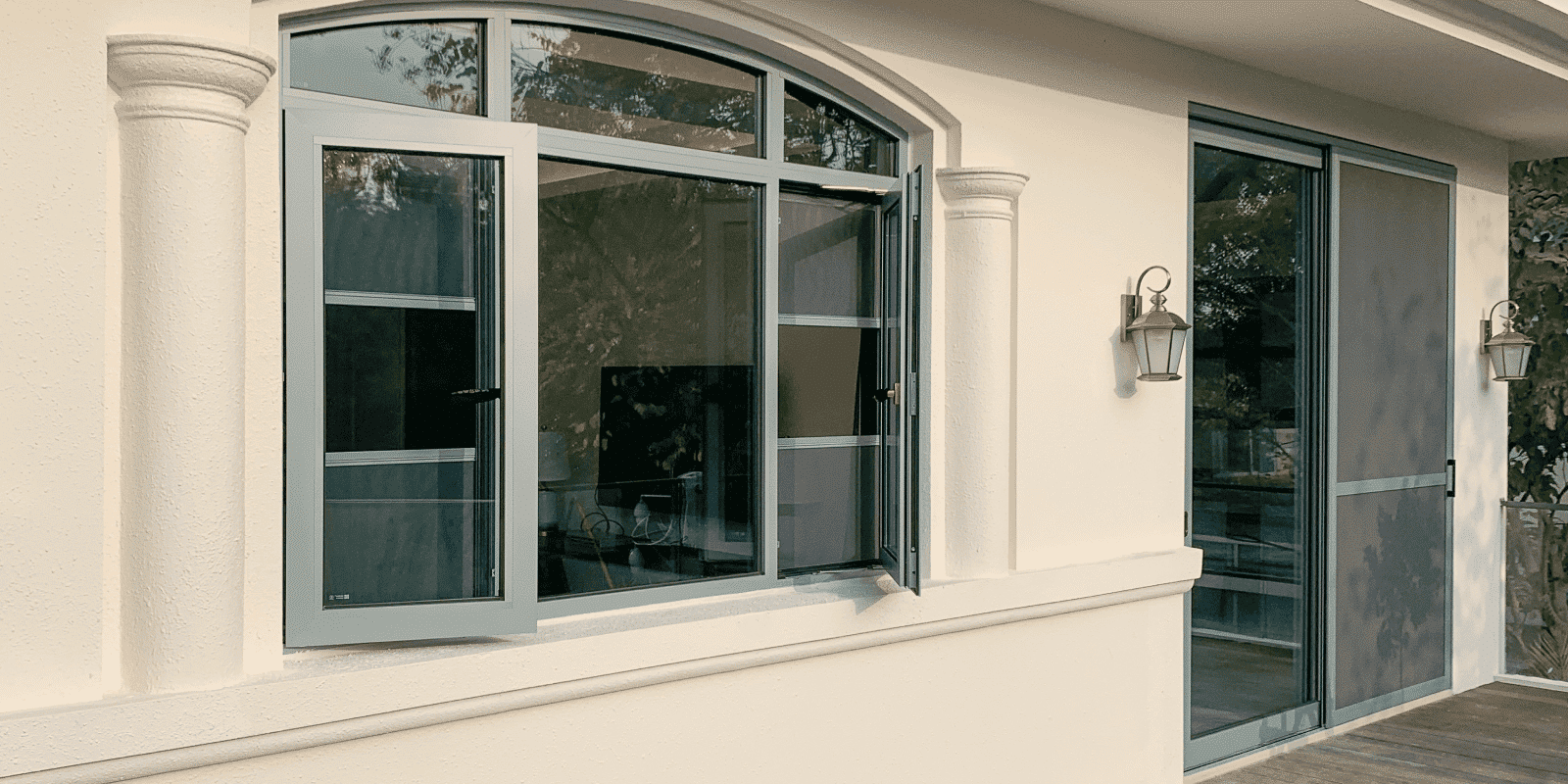
Executive Summary: The casement window is the architect’s choice for a reason. Swinging outward like a door, it offers 100% ventilation capacity and the tightest air seal of any operable window. This guide explores why this classic style—when engineered with modern aluminum—is the gold standard for energy efficiency and clear views.
When architects design high-performance homes, they rarely choose windows based on looks alone. They look at Building Physics: How does air move? How does the seal perform under pressure? How much light enters the room?
In this analysis, the casement window consistently outperforms its rivals (Double-Hung and Sliding windows). It is the only operable window style that successfully combines the airtightness of a fixed picture window with the ventilation capacity of an open door.
Defining the Casement Window
In simple terms, a casement window is a window that is attached to its frame by one or more hinges at the side. Unlike a double-hung window that slides up and down, a casement swings open like a door.
The Mechanics: Crank vs. Push-Out
A casement window is hinged on the side and swings outward. While the concept is simple, the operation modes have evolved to suit different lifestyles:
- The Roto-Crank System: The traditional method where a handle (often foldable) turns gears to push the sash open.
Best for: Hard-to-reach places, like over a kitchen sink, where you can’t leverage your body weight to push a window open.
- The Modern Push-Out: A premium handle (similar to a door) releases the friction stay, allowing you to push the window open manually.
Best for: A clean, minimalist look (no mechanical crank housing) and faster operation.
Ventilation Physics: The “Wind Scoop” Effect
Many homeowners assume all open windows provide equal air. They don’t. A sliding window offers passive ventilation—air must decide to flow in.
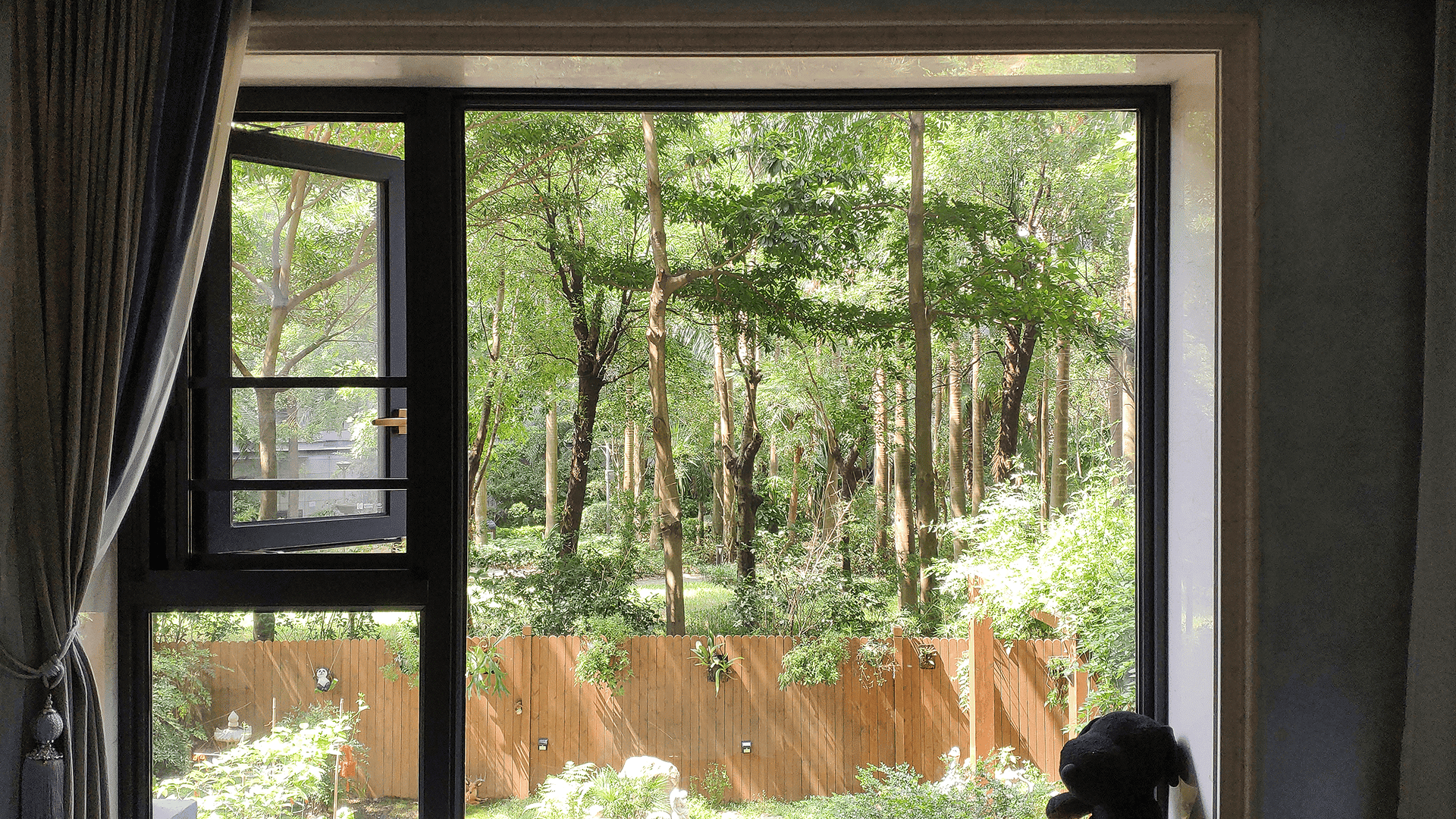
Casement windows offer ACTIVE ventilation. Because the sash projects outward perpendicular to the house, it acts as a wind scoop (or a sail). It catches breezes moving parallel to your exterior wall and physically redirects that fresh air into your home.
🌿 The 100% Rule: Unlike sliders that are always 50% blocked by glass, a casement opens the full aperture. A 3ft wide casement gives you 3ft of airflow. This makes it the most efficient tool for cooling a home naturally (Passive Cooling).
Sealing Physics: Why Wind Makes It Stronger
This is the most critical advantage for energy-conscious homeowners. The difference lies in Compression vs. Friction.
The Sliding Window Weakness
Sliding windows rely on “brush seals” (weatherstripping). For the window to slide, there must be a gap. When wind hits a sliding window, air infiltrates through these brush seals. High wind = High leakage.
The Casement Strength
Casement windows use Compression Seals (EPDM rubber gaskets). When the wind blows against a casement window, the pressure actually pushes the sash tighter against the frame seals. The harder the wind blows, the tighter the seal becomes.
Strategic Placement in Your Floorplan
Where should you install casement windows? Their unique operation makes them the “problem solver” of floorplans:
- 🍳 Over the Kitchen Sink:
Trying to lift a heavy double-hung sash while leaning over a sink is a back-strain waiting to happen. A casement crank allows you to open the window effortlessly with one hand, even at a distance.
- 🚨 Bedroom Egress (Safety):
Building codes require bedroom windows to have a large enough clear opening for escape during a fire. Because the entire sash of a casement opens, it often meets Egress Code requirements at a much smaller overall size than a slider or double-hung would require.
The “Sagging” Truth: Why Material Is Everything
If casements are so perfect, why do some people complain about them sticking or not closing properly after a few years?
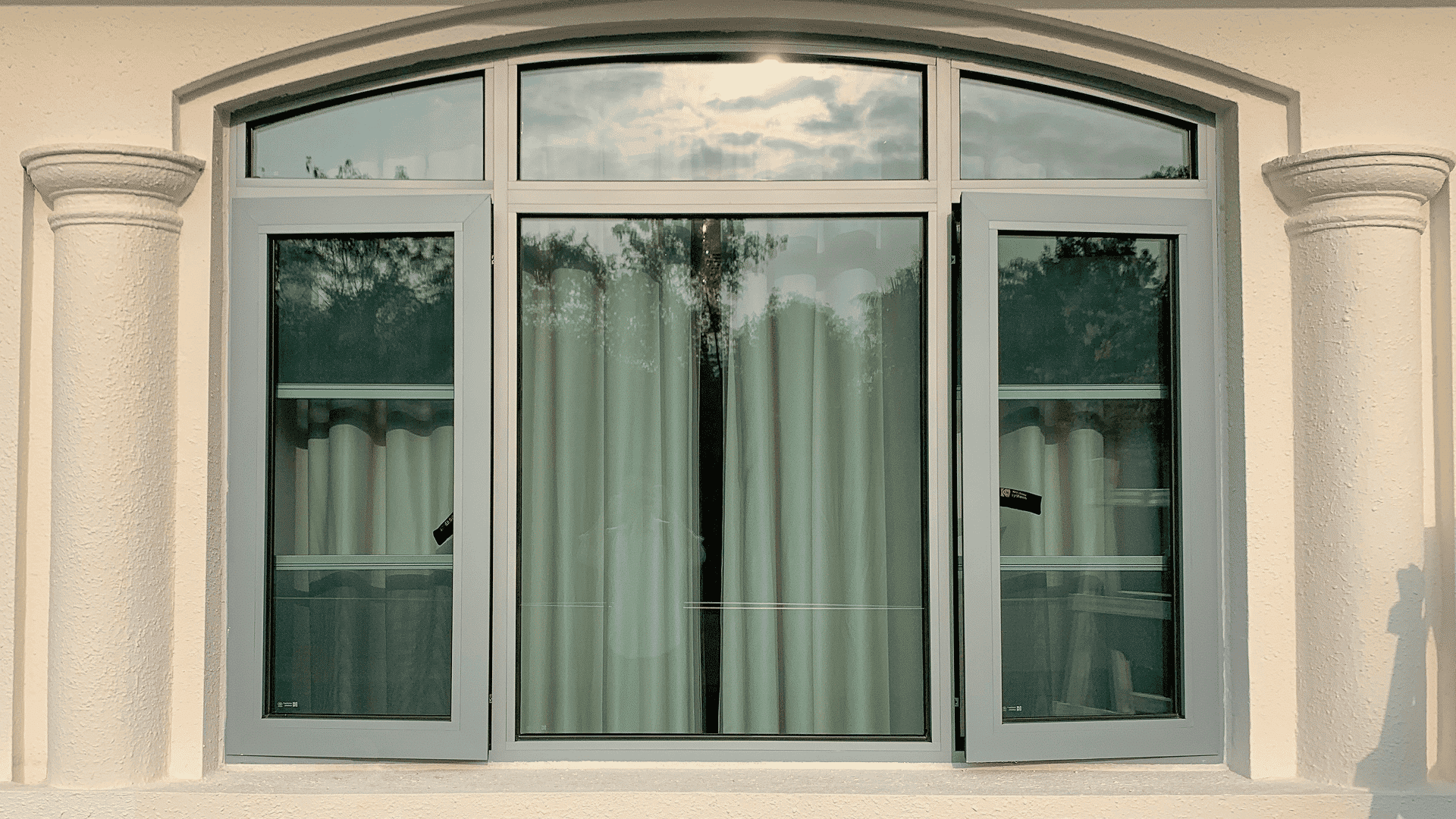
The culprit is usually Vinyl (uPVC).
An open casement sash acts like a lever, putting immense torque on the hinges. Vinyl is a soft plastic; over time, heat and gravity cause the frame to warp and the sash to “sag” out of square. Once it sags, it won’t lock.
The Aluminum Solution:
This is why Architectural Grade Aluminum is non-negotiable for long-lasting casements. LIKI systems use 6063-T66 Aluminum Alloy. This aerospace-grade metal has the tensile strength to hold heavy double or triple-pane glass rigidly square for decades, without warping.
Combined with Technoform® thermal breaks, you get the structural rigidity of metal with the insulation performance you’d expect from vinyl—solving the “sagging” issue permane
Ready to Open Up?
“A machine for ventilation and a shield against the elements.”