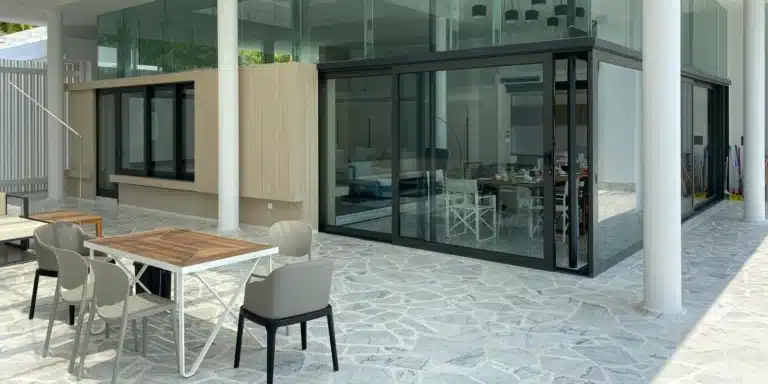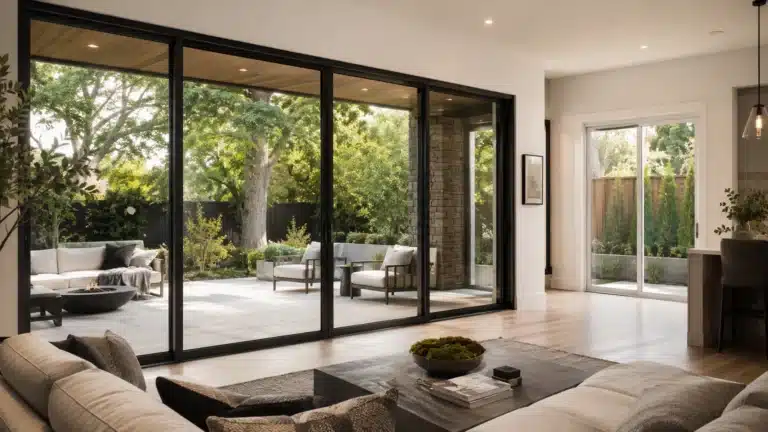

Executive Summary: The choice between Bi-Fold and Sliding doors defines how you connect with the outdoors. Bi-Folds offer a 100% opening for seamless entertaining, while Sliding Doors maximize glass area for panoramic views. This guide compares their mechanics, aesthetics, and performance, showing how LIKI’s global engineering (featuring Brio and Roto hardware) optimizes both systems for luxury homes.
Homeowners and architects are no longer satisfied with a standard 6-foot patio door. They want folding glass walls that vanish, or slim-frame sliders that turn a façade into a moving picture.
But when designing that critical transition space, you face a classic dilemma: Bi-Fold vs. Sliding Doors. Which one offers the right balance of view, ventilation, and performance for your specific project?
The Mechanics: How They Move
The Bi-Fold Door (Folding Glass Wall)
Mechanism: Panels are hinged together and fold (accordion-style) to stack against the wall.
The LIKI Difference: We utilize Brio (Australia) hardware—the “Rolls Royce” of folding systems. This ensures massive panels glide weightlessly and stack neatly, creating a true 100% opening.
The Sliding Door
Mechanism: Large panels glide horizontally on parallel tracks.
The LIKI Difference: Standard sliders can be heavy. LIKI uses German Slide mechanisms (Roto).
View vs. Opening: What Matters More?
This is the most critical decision point. Do you value the view when the door is closed, or the space when the door is open?
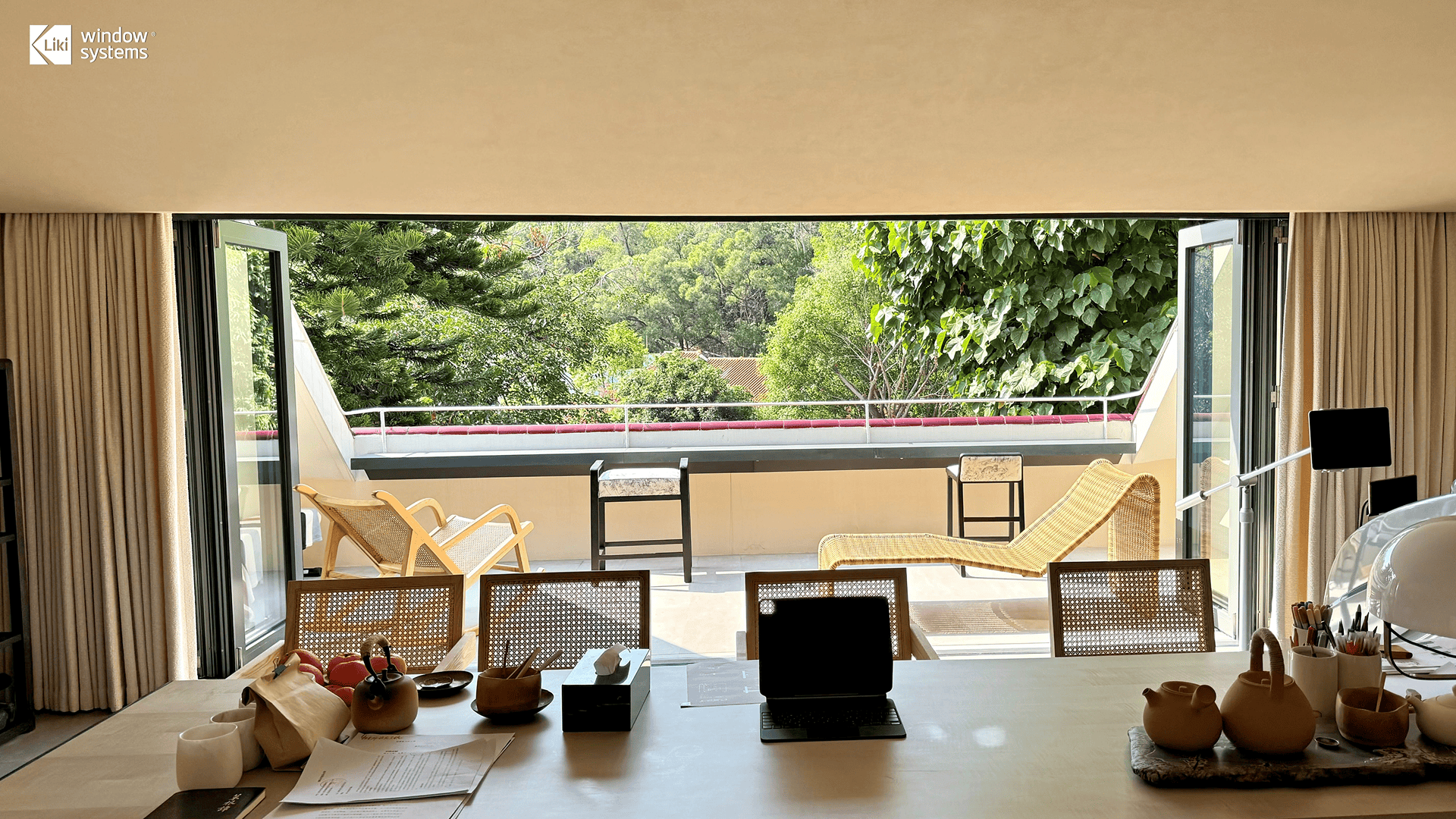
Bi-Fold: The “Wall Remover”
Best For: Entertainers & Indoor-Outdoor Living.
Bi-folds are the only system that allows you to open up almost 100% of the aperture. When stacked, the wall effectively disappears. This is perfect for connecting a kitchen to a patio deck for parties.
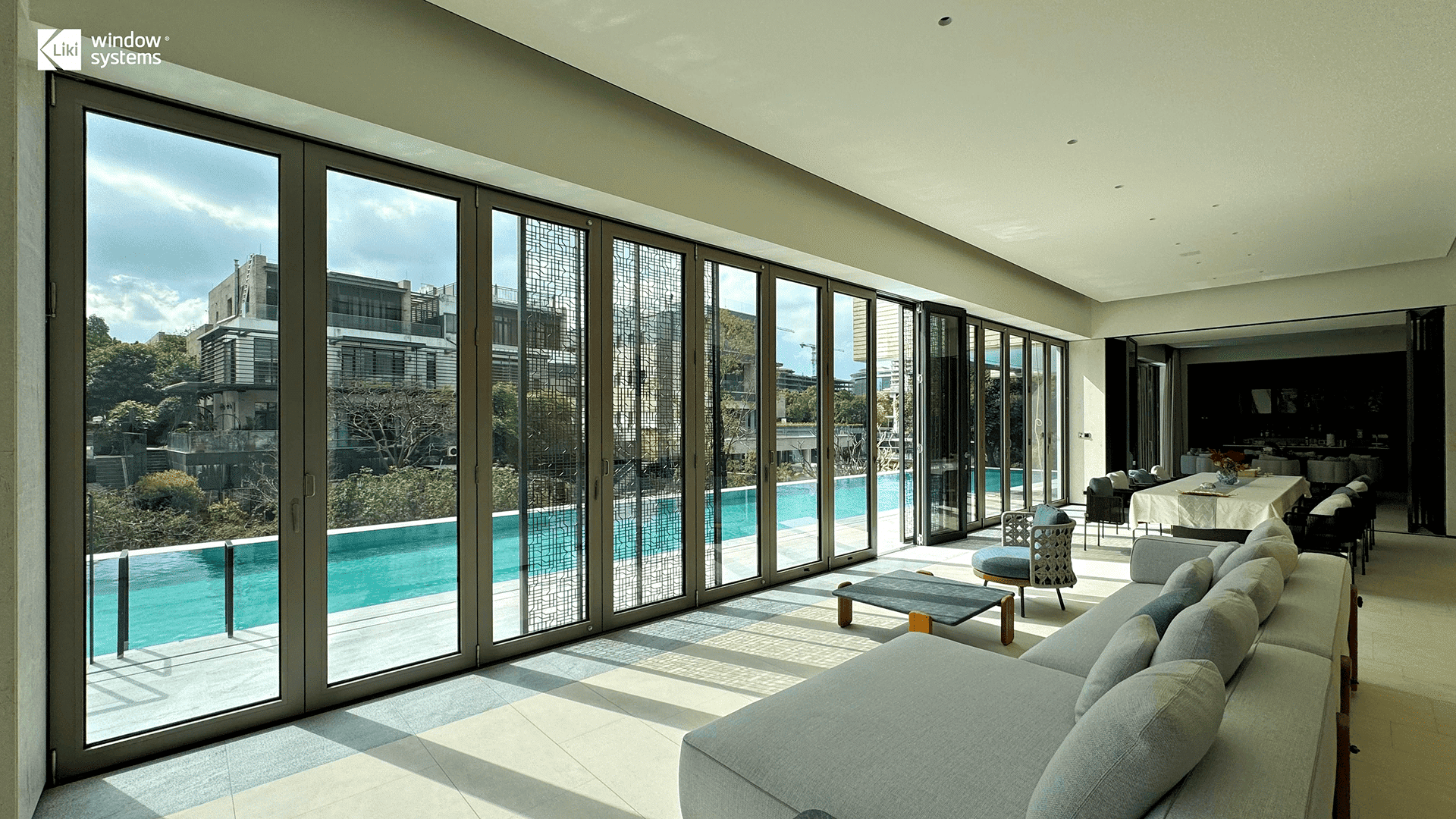
*Trade-off: When closed, you have more vertical frames breaking up the view (every 3-4 feet).
Sliding: The “Panoramic Lens”
Best For: View-Seekers & Minimalists.
Sliding doors allow for much wider individual panels (up to 10 feet wide with LIKI systems). This means fewer vertical frames and an uninterrupted view, even when the door is closed.
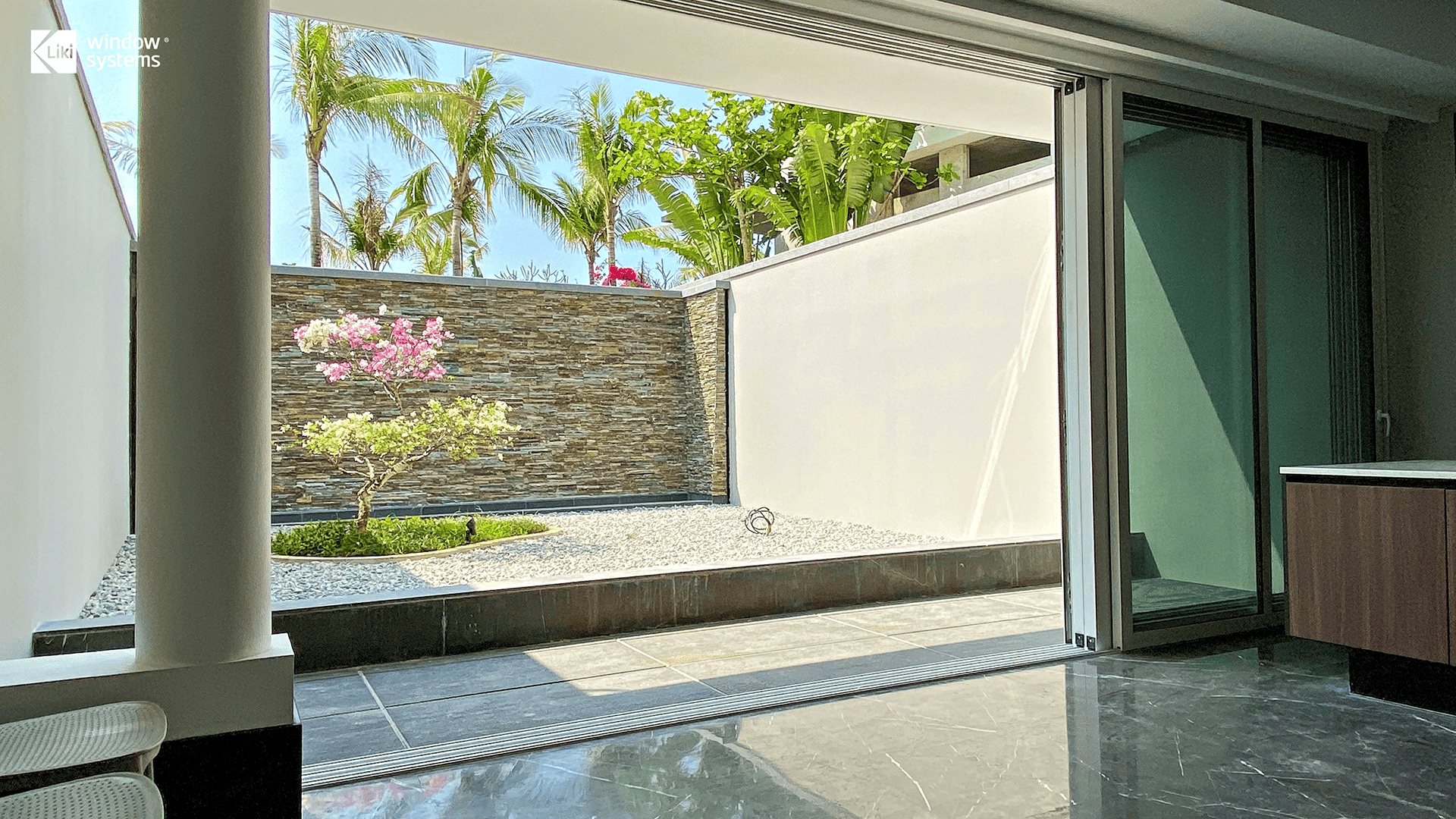
*Trade-off: Unless you have a “pocket” wall to hide the panels, the opening is usually limited to 50% or 66%.
Performance Matrix: The Breakdown
| Feature | Bi-Fold Doors | Sliding Doors |
|---|---|---|
| Max Opening | ~95% (Clear Opening) | ~50% – 66% (Unless Pocket) |
| Sightlines (Closed) | More visible frames | Minimalist / Ultra-Wide Glass |
| Screening | Requires Retractable (Centor) | Easy to screen |
| Threshold | Can be flush (Rebated) | Flush track available |
The LIKI Standard: Engineered to Perform
Historically, large doors were drafty and leaked heat. LIKI has solved this through System Engineering.
- ✓Thermal Continuity: Both systems utilize Technoform Bautec (Germany) insulation bars, ensuring that even a 20-foot glass wall meets energy codes.
- ✓Storm Ready: Utilizing 316SS Marine Grade hardware and heavy-duty EPDM seals, our systems are rated for high Design Pressure (DP), suitable for coastal zones.
- ✓Integrated Screens: We partner with Renson (Belgium) to offer integrated insect screens that vanish into the frame when not in use—solving the biggest headache of large openings.
Verdict: Which fits your lifestyle?
Choose Bi-Folds If: You want to erase the wall completely and merge your indoor/outdoor space for entertaining.
Choose Sliders If: You prioritize an unobstructed view 365 days a year and prefer a sleek, modern aesthetic.
Redefine Your Horizon
Whether you choose the dynamic folding wall or the panoramic slider, LIKI engineers it to your exact architectural specifications.