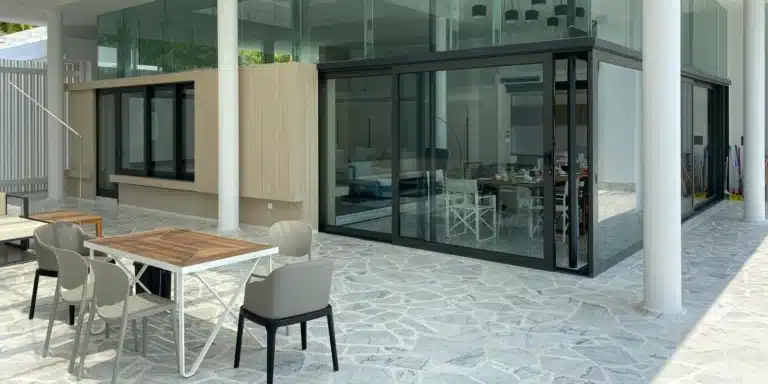

Achieving RC2 window secure ventilation tilt and turn windows requires precise mechanical engineering rather than just leaving a sash cracked open. Tilt & Turn Windows utilize distributed load paths, continuous locking points, and specific tilt gap geometries to provide certified intrusion resistance while maintaining continuous fresh air exchange in ground-floor applications.
Scene: A ground-floor master suite at midnight. The clients want to let the cool night breeze in without compromising the physical perimeter.
What you notice: The classic architectural conflict between natural ventilation and security anxiety. Opening a standard casement or sliding sash leaves the home immediately vulnerable, forcing occupants to choose between fresh air and peace of mind.
What’s really happening: When standard windows are partially open, the sash disconnects from the locking mechanism, offering zero resistance to opportunistic forced entry.
What to do next: Verify if the specified Tilt & Turn Windows incorporate an RC2-rated hardware perimeter that remains mechanically engaged even in the tilted position.
For custom builders and architects, specifying secure ventilation means moving beyond the assumption that a “small gap” is safe. It requires a quantifiable understanding of structural engagement. Here is the framework for evaluating the mechanical load paths, geometric limitations, and hardware requirements that elevate tilt ventilation into a certified security measure.
Midnight Breezes Without the Risk: How Tilt & Turn Windows redefine secure ventilation (RC2 load paths).
The Physics of the “Tilt” Position
The core variable in window secure ventilation is how the system manages structural load when the weather seal is broken. In standard windows, opening the sash transfers the entire load to the hinges, completely disengaging the primary locks. Tilt & Turn Windows operate on a fundamentally different physical path. When the handle is turned to the tilt position, the weight of the sash is fully supported by the heavy-duty bottom hinge, while the top of the sash is securely retained by a steel scissor stay (shear arm). This continuous mechanical connection ensures that the sash cannot be forcefully pulled or manipulated from the outside.
EN 1627 RC2 Standard in Real-World Scenarios
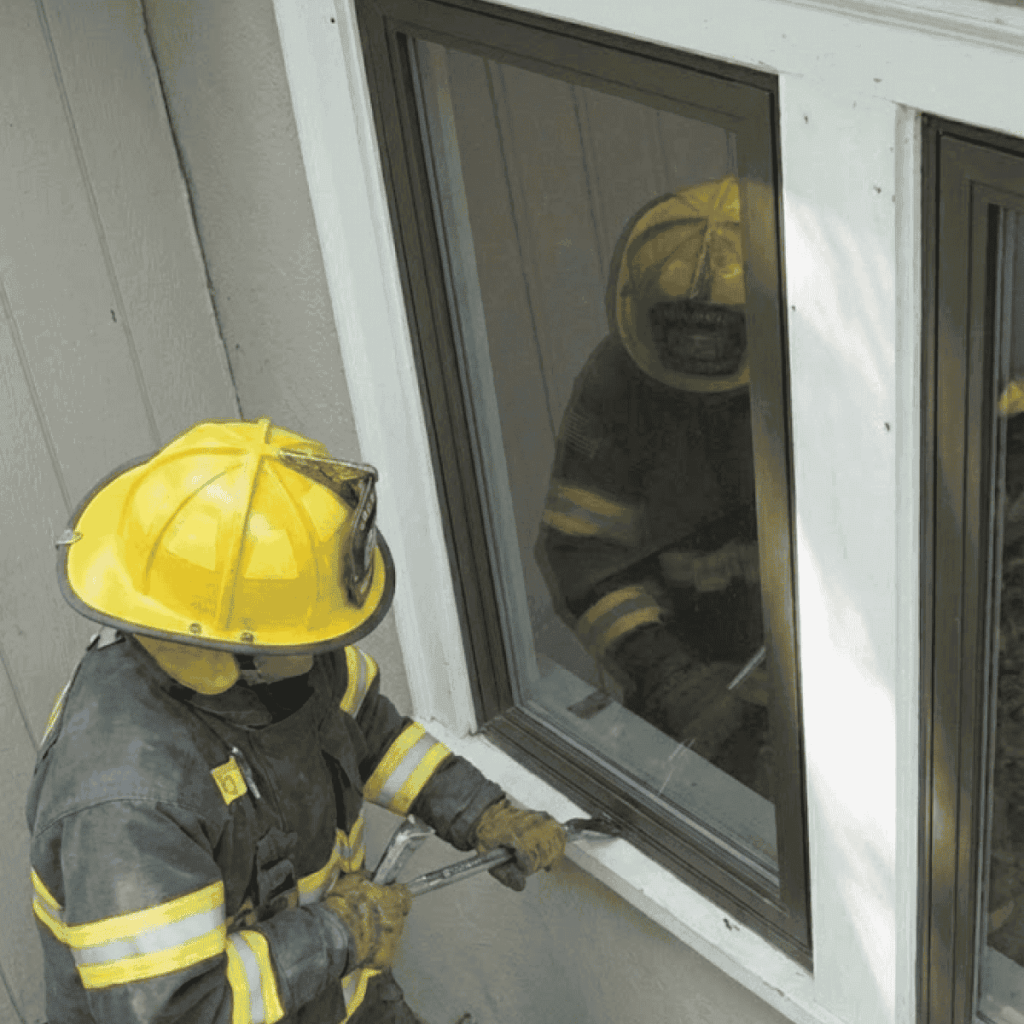
EN 1627 RC2 StandardTo establish a reliable baseline for intrusion resistance, the European EN 1627 standard defines specific Resistance Classes (RC). The RC2 rating dictates that the window system must withstand at least three minutes of sustained, targeted physical attack using basic leverage tools like screwdrivers, wedges, and pliers. In the context of secure ventilation, the hardware must maintain its structural integrity and prevent the sash from being levered out of the frame, even when it is actively tilted open.
What matters: The integration of the hardware within the extrusion. The system’s ability to resist forced entry relies heavily on the shear strength of the hardware components and their anchoring depth within the aluminum profile.
Common mistakes: A frequent error in residential specification is assuming that any window with a “ventilation limit” provides security. Restrictor clips or vent latches on standard windows are designed for fall prevention, not intrusion resistance. They will easily fail under the leverage of a standard pry-bar.
Further Reading: What Are Tilt & Turn Windows? The European Standard for Modern American Homes.

Open vs Vulnerable: Tilt & Turn Windows and the precise tilt gap geometry that defeats leverage tools.
The 150mm Gap Limit vs. Tool Insertion
The structural vulnerability of any open window lies in the exposed gap. For Tilt & Turn Windows engineered to RC2 specifications, the ventilation gap at the top of the sash is strictly controlled by the mechanical shear arm, typically limiting the opening to approximately 150mm (about 6 inches). This specific geometry is not arbitrary. It creates a physical barrier that prevents the insertion and effective operation of standard Class 2 burglary tools, such as large pry-bars or 14.5-inch screwdrivers. Without the physical space to achieve leverage against the primary locking mechanisms, opportunistic forced entry becomes structurally impossible within the standard three-minute testing window.
Dynamic Shifting Protection
When extreme lateral force is applied to the exterior of a tilted sash, standard friction hinges often bend, allowing the gap to widen. In contrast, heavy-duty tilt-and-turn hardware utilizes dynamic shifting protection. The load is immediately transferred to the bottom hinge and the steel shear arm. The geometric interlocking between the aluminum sash profile and the outer frame restricts further movement. Even under sustained prying pressure, the sash remains suspended in a rigid, fixed triangle, maintaining the secure perimeter while still allowing air exchange.
What matters: The rigidity of the shear arm (scissor stay). If this component flexes or is anchored into a weak, single-chamber extrusion, the tilt gap can be forcefully expanded, compromising the entire security strategy.
Hardware is only as strong as its strike plate: Tilt & Turn Windows locking points and extrusion bite depth.
Mushroom Cams vs. Standard Rollers
The defining feature of RC2-compliant Tilt & Turn Windows is the transition from standard cylindrical rollers to mushroom-headed cams (mushrooms pins). During a forced entry attempt, standard cylindrical cams can simply slip out of their strike plates as the aluminum frame naturally bows under pry-bar pressure. Mushroom cams feature a distinctive T-shaped head that physically hooks into a specialized security strike plate. When the window is attacked and the frame attempts to bow, the mushroom head firmly grips the strike plate, locking the sash and frame together with immense shear strength.
Extrusion Wall Thickness & Strike Plate Anchoring
Even the most advanced mushroom cams are rendered useless if the strike plate can be torn out of the window frame. This is where the structural integrity of the aluminum extrusion becomes critical. While entry-level residential windows may use 1.4mm aluminum walls, secure ventilation requires a robust foundation. Strike plates must be anchored into multi-chamber profiles with a wall thickness of 2.0mm or greater to provide sufficient screw bite depth.
When evaluating European-grade hardware systems—such as those engineered by Roto or GU—architects should verify the continuous perimeter locking distribution. In any architectural specification, it is essential that the customer retains the final choice in all hardware and configuration selections, while the manufacturing and engineering teams provide structural recommendations to ensure the system meets the desired intrusion resistance levels.
How to verify: Request the hardware layout drawings. RC2 standard requires locking points to be distributed at specific intervals (typically no more than 800mm apart) around the entire perimeter of the sash, not just on the handle side.
| Component | Standard Window Systems | RC2 Tilt & Turn Windows (Secure Ventilation) |
|---|---|---|
| Locking Point Design | Cylindrical rollers (friction-based engagement) | Mushroom cams (mechanical interlocking) |
| Strike Plate Anchoring | Surface-mounted on single-chamber profiles | Steel-reinforced, anchored into multi-chamber extrusions |
| Aluminum Wall Thickness | 1.2mm – 1.4mm (vulnerable to tear-out) | 2.0mm+ at hardware mounting zones |
| Tilt Position Stability | Basic restrictor clips (easily bypassed) | Heavy-duty steel shear arm (resists lateral leverage) |

The Pry-Bar Test: Tilt & Turn Windows failure modes when standard cams meet forced entry attempts.
Failure Point 1: Strike Plate Tear-out
In forced entry scenarios, opportunistic intruders often target the gap between the sash and the frame with a pry-bar or flathead screwdriver. When standard windows face this leverage, the first failure point is rarely the glass; it is the strike plate. If a standard strike plate is surface-mounted onto a thin-walled aluminum extrusion, the shear force generated by a 15-inch pry-bar will literally tear the screws out of the aluminum. RC2-rated Tilt & Turn Windows mitigate this by utilizing multi-chamber extrusions (2.0mm+ wall thickness) and steel-reinforced anchoring zones, ensuring the strike plate shears the tool before the aluminum yields.
Failure Point 2: Glazing Bead Defeat
Another critical vulnerability in standard designs is the exterior glazing bead. If the window hardware resists the pry-bar, attackers may attempt to remove the glass panel entirely by popping off the glazing beads. RC2 certification requires that the glazing system itself resists manipulation. This is achieved through interior-snap glazing beads or continuous structural glazing bonding (glass bonded directly to the sash), preventing the glass from being removed from the exterior even if the perimeter seals are compromised.
How to verify: Inspect the hardware layout drawing and the glazing details. For secure ventilation, confirm that locking points are spaced no more than 800mm apart, and ensure the glazing beads are positioned on the interior side of the home.
Specifying for Peace of Mind: Tilt & Turn Windows RC2 submittal requirements for custom builders.
Wall Substrate & Shim Placement
A high-performance window is only as secure as its connection to the building envelope. Specifying RC2 Tilt & Turn Windows is futile if the window can be pushed entirely out of the rough opening. The EN 1627 standard explicitly defines boundary conditions for the surrounding wall. The frame must be anchored into a robust substrate (such as concrete, solid masonry, or reinforced timber framing), and the gap between the window frame and the rough opening must be properly shimmed with load-bearing blocks precisely at the locking points. This prevents the aluminum frame from flexing outward into the installation gap when leverage is applied.
| RC2 Boundary Condition | Specification Requirement | Why It Matters for Window Secure Ventilation |
|---|---|---|
| Wall Substrate | Reinforced timber, concrete, or solid masonry | Prevents the entire window frame from being dislodged from the rough opening. |
| Shim Placement | Rigid, pressure-resistant blocks at all locking points | Stops the aluminum frame from bowing into the rough opening gap during a pry-bar attack. |
| Glass Configuration | P4A laminated security glass (EN 356) | Resists blunt force impacts (e.g., thrown stones or hammers) without shattering. |
| Glazing Method | Interior beads + structural bonding/security clips | Prevents intruders from bypassing the hardware by removing the glass panel. |
Custom Builder’s RC2 Verification Checklist
Before approving submittals for ground-floor secure ventilation systems, ensure the following criteria are documented:
- Verify the presence of mechanical shear arms designed to support the sash weight and resist lateral force in the tilt position.
- Confirm the use of mushroom-headed cams instead of standard friction rollers.
- Check that the aluminum extrusion wall thickness at hardware mounting points is ≥ 2.0mm.
- Ensure the hardware layout specifies locking points at maximum 800mm intervals along the entire sash perimeter.
- Validate that the installation detail includes pressure-resistant shims positioned directly behind all primary strike plates.
- Confirm the glazing schedule specifies P4A laminated glass for all accessible ground-floor elevations.
“In forced entry engineering, there is no such thing as an ‘unbreakable’ window. The goal of the EN 1627 RC2 standard is to create a predictable, quantifiable time barrier. When we analyze the load paths during a pry-bar attack, the difference between standard rollers and mushroom cams becomes immediately apparent in the extrusion’s failure mode. We always recommend integrating European-tested systems like Roto or GU for their mechanical interlocking capabilities, though the final hardware configuration and security strategy remain entirely the customer’s choice to best suit their project’s specific risk profile.”
— Bella, Liki Structural Consultant
Frequently Asked Questions
Can standard tilt and turn windows meet RC2 intrusion resistance requirements?
No. Standard configurations typically utilize friction-based cylindrical rollers and standard aluminum extrusions. Achieving an RC2 rating for Tilt & Turn Windows requires mechanical upgrades, specifically mushroom-headed cams, reinforced security strike plates, and multi-chamber profiles with a minimum 2.0mm wall thickness to prevent hardware tear-out.
How wide does the window open in the secure ventilation tilt mode?
In RC2-compliant Tilt & Turn Windows, the tilt gap is geometrically restricted by a heavy-duty steel shear arm. This mechanism typically limits the top opening to approximately 150mm (about 6 inches). This specific dimension allows for continuous airflow while physically preventing the insertion and operation of standard Class 2 leverage tools.
Does the glass specification matter for secure ventilation?
Yes, the glazing is a foundational component of the security perimeter. Even if the hardware holds, a window fails if the glass is easily breached. For RC2 compliance, Tilt & Turn Windows must integrate P4A laminated security glass and utilize interior glazing beads or structural glass bonding to prevent exterior removal.
Are electronic security sensors compatible with this hardware?
Advanced European hardware systems support concealed magnetic contacts and locking sensors within the extrusion. These components can monitor whether the Tilt & Turn Windows are fully locked, open, or in the tilt ventilation position, allowing for seamless integration with commercial or residential security networks.
Is a specific hardware brand required for secure ventilation?
While the customer always retains the final choice in hardware and configuration selections, achieving verified intrusion resistance requires components tested to the EN 1627 standard. Engineering teams typically recommend proven systems from manufacturers like Roto or GU, as their mushroom cam technology provides the necessary structural interlocking.